Project Macoma: what we built, what we learned, and what comes next
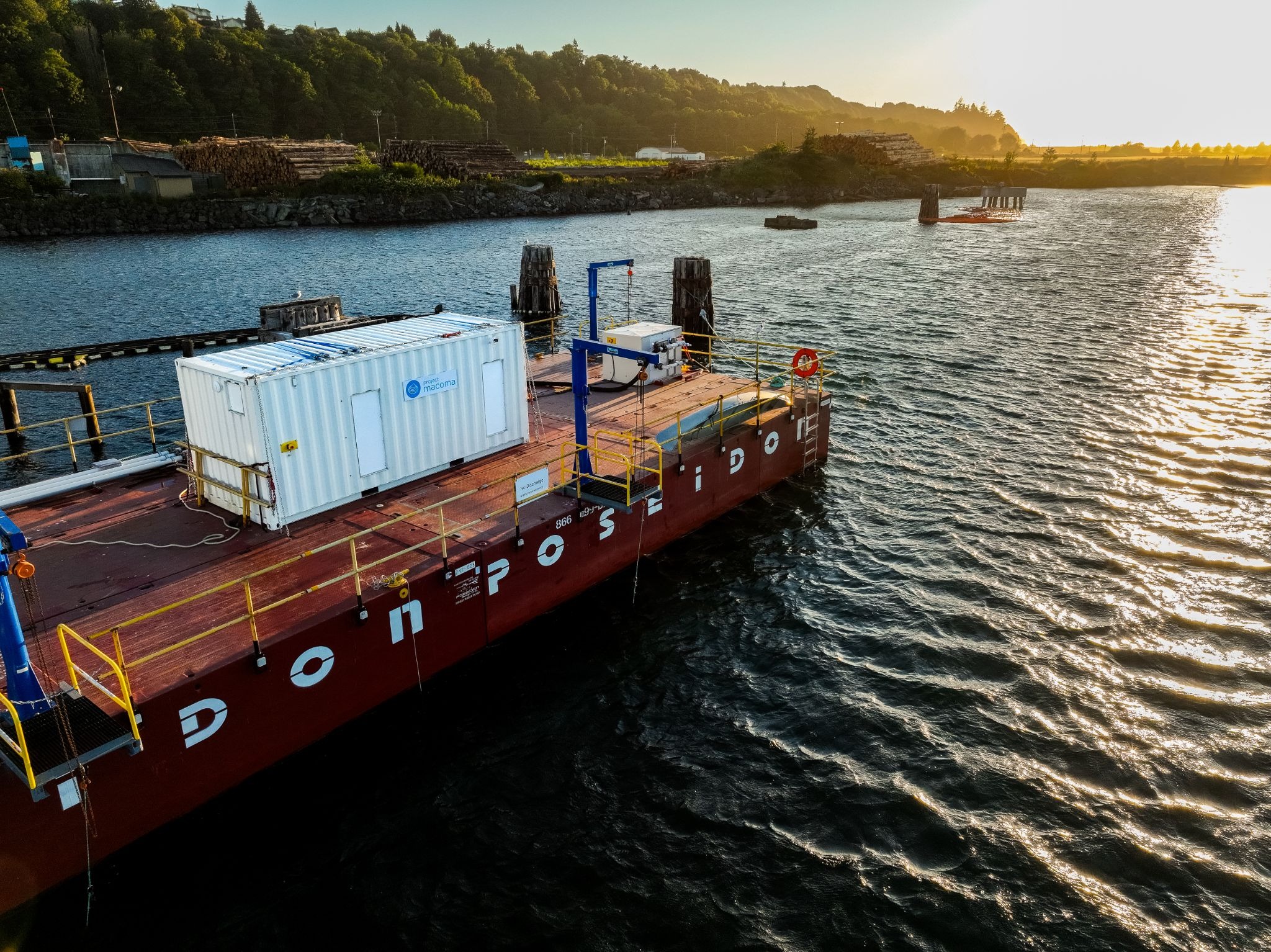
Washington state has been Ebb's home away from home for the past several years — first at Pacific Northwest National Laboratory in Sequim, where we conducted our earliest releases of alkaline-enhanced seawater, and then at Project Macoma in Port Angeles, where we’ve been operating our first field pilot. As we wrap up operations in Port Angeles, we owe deep gratitude to local Tribes and the Port Angeles community who welcomed us and helped shape this work from the start. We're also reflecting on what this project taught us, and what comes next.
Why pilots matter: setting the foundations for scale
At Ebb, we know that scaling a first-of-its-kind technology means more than just solving novel technical problems. It means demonstrating — in the real world — that operations are safe, that carbon removal can be rigorously measured, and that the approach creates genuine value for partners. As our first field pilot, Project Macoma is where all of the pieces required to operate in the real world came together for the first time: the science and technology, the community trust, the regulatory precedent, and the operational know-how. These are the foundations that make scaling Ebb’s technology possible.
Building the blueprint for safe and responsible deployment
At Project Macoma, living our ethos of starting slow to go far meant investing the time it takes to earn trust, well before operations began. We engaged early and often with the community: holding meetings, showing up at public events, and incorporating local feedback into how we designed and ran the project. Details like the location of in-water sensors, signage, and noise mitigation mattered to neighbors, and we treated them as a central part of the work.
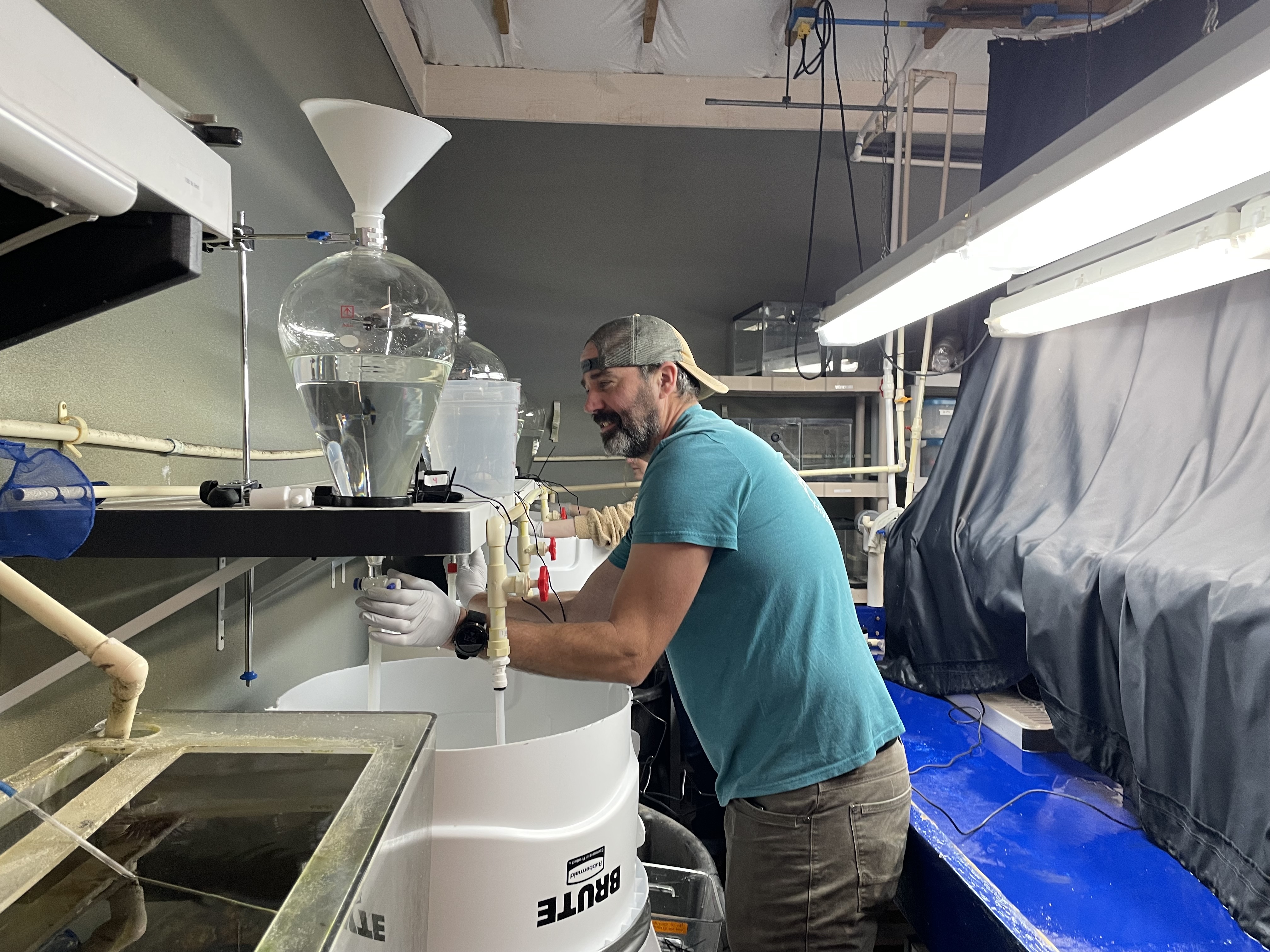
Grounding our work in science was paramount. We hosted research teams from the Department of Energy’s Pacific Northwest National Laboratory, University of Washington, Oregon State and UC San Diego to conduct studies on topics that varied from air-sea gas exchange to bacterial communities. And before we ever released a drop of alkalinity into Port Angeles Harbor, we worked with the Lower Elwha Klallam Tribe to conduct a novel study on juvenile coho salmon — a species of deep ecological and cultural significance in the Pacific Northwest — to understand how our operations might affect them. Even under the most conservative test conditions, the salmon showed no adverse effects.
That scientific rigor extended to how we prepared for and monitored the project. Before operations began, we collected nine months of baseline data on water chemistry and conducted environmental surveys to establish a clear picture of site conditions. Once operating, we maintained continuous in-water monitoring and deployed shellfish on-site to track any effects on their growth or survival.
Every site will be unique: different ecosystems, different communities, different questions to answer. But the approach and methodologies we developed at Macoma, engaging early, listening carefully, and prioritizing safety, is something we carry into every project that follows.
Building a robust tool kit for ocean-based carbon removal
For ocean-based carbon removal to scale, scientists and carbon buyers need confidence that removals are accurately measured and independently verifiable. Project Macoma is where we built and stress-tested the toolkit to do that.
Our approach has three steps: measure how much alkalinity we add to the ocean, track how it spreads through the water, and model how that alkalinity draws CO₂ out of the atmosphere over time. At Project Macoma, we used multiple modeling frameworks to accomplish this — including near-field tools to model how alkalinity disperses close to the outfall, and well-validated regional ocean models like LiveOcean, operated by the University of Washington, to track how it moves across the broader ocean basin over time. We also ran an in-water dye test to directly observe how water moves and mixes at our site under different tidal conditions, grounding our models in observed data.
Because existing modeling tools weren't originally designed to quantify carbon removal, Macoma required adapting them for this purpose and incorporating best practices from the scientific literature to account for natural ocean variability. Working through those challenges enables us to move from a bespoke, one-off approach toward something standardized, transparent, and replicable — the kind of rigorous, verifiable methodology required by buyers and third-party verifiers.
Desalination integration: unlocking the path to scale
Desalination represents one of the most promising pathways for scaling Ebb’s technology, and Project Macoma helped us prove why. The basic idea is straightforward: desalination plants already move massive volumes of seawater, and they produce brine — a salty, concentrated waste stream — as a byproduct. Ebb's technology uses that brine as a feedstock, transforming what was waste into an asset.
At Macoma, we built a small-scale seawater reverse osmosis desalination system to demonstrate how this integration works in practice. The results validated something central to our business model: integration doesn't just enable carbon removal — it makes the underlying desalination operate more efficiently. We demonstrated roughly a 10% increase in freshwater production and a 15% reduction in electricity use for the desalination plant. These compounding effects of more production with less cost enable a significant reduction in the cost of desalination – increasing profit margin for the plant by more than 50%. Those are operational wins that give desalination operators a compelling, economics-first reason to adopt our technology, independent of carbon markets.
What comes next
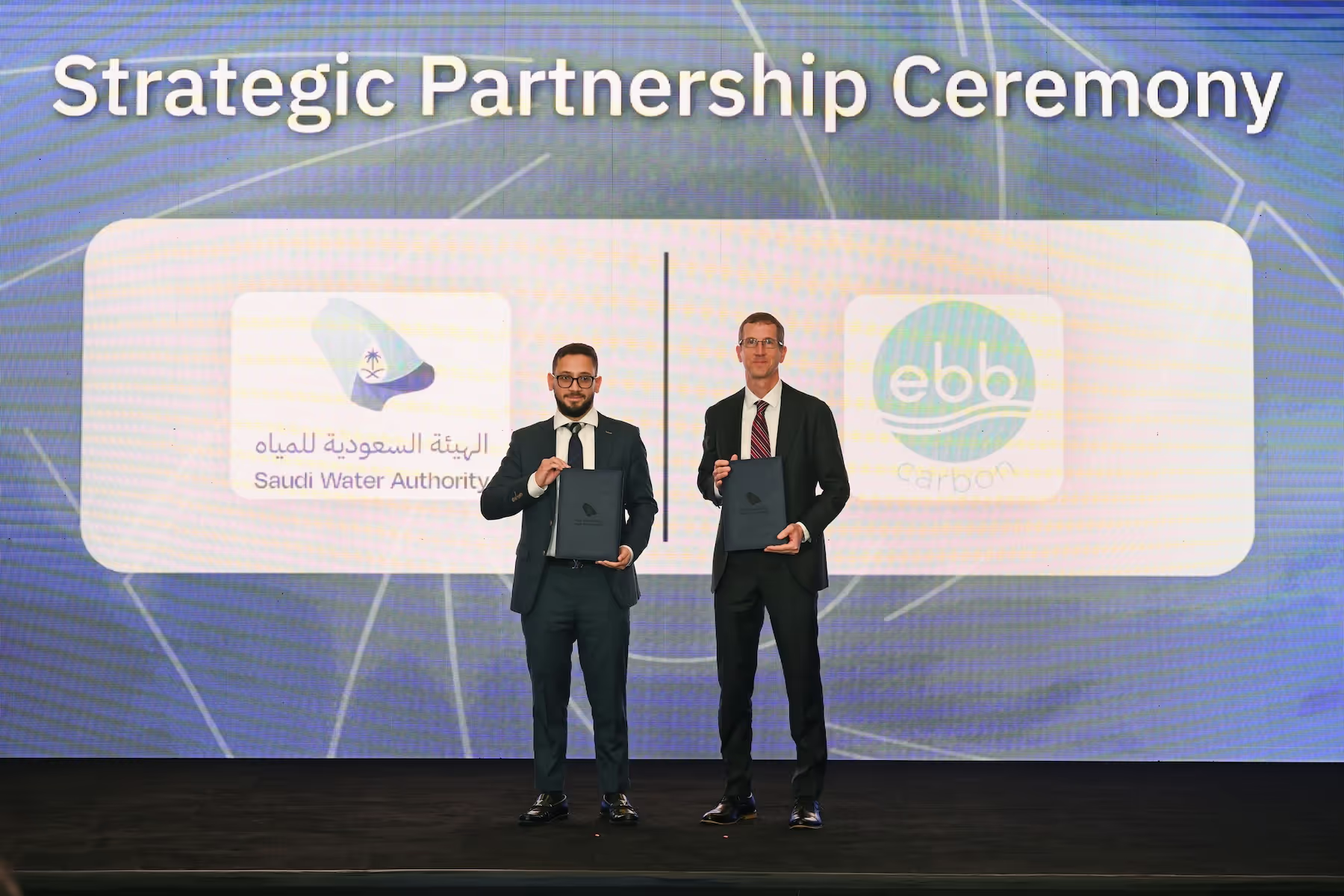
Project Macoma has set the foundations for scaling Ebb's technology. Now we are turning our attention towards working with partners to integrate with desalination plants to tap into one of the planet's largest, most scalable opportunities for carbon removal. Our partnership with the Saudi Water Authority, the world's largest desalination operator, is where that next chapter begins.